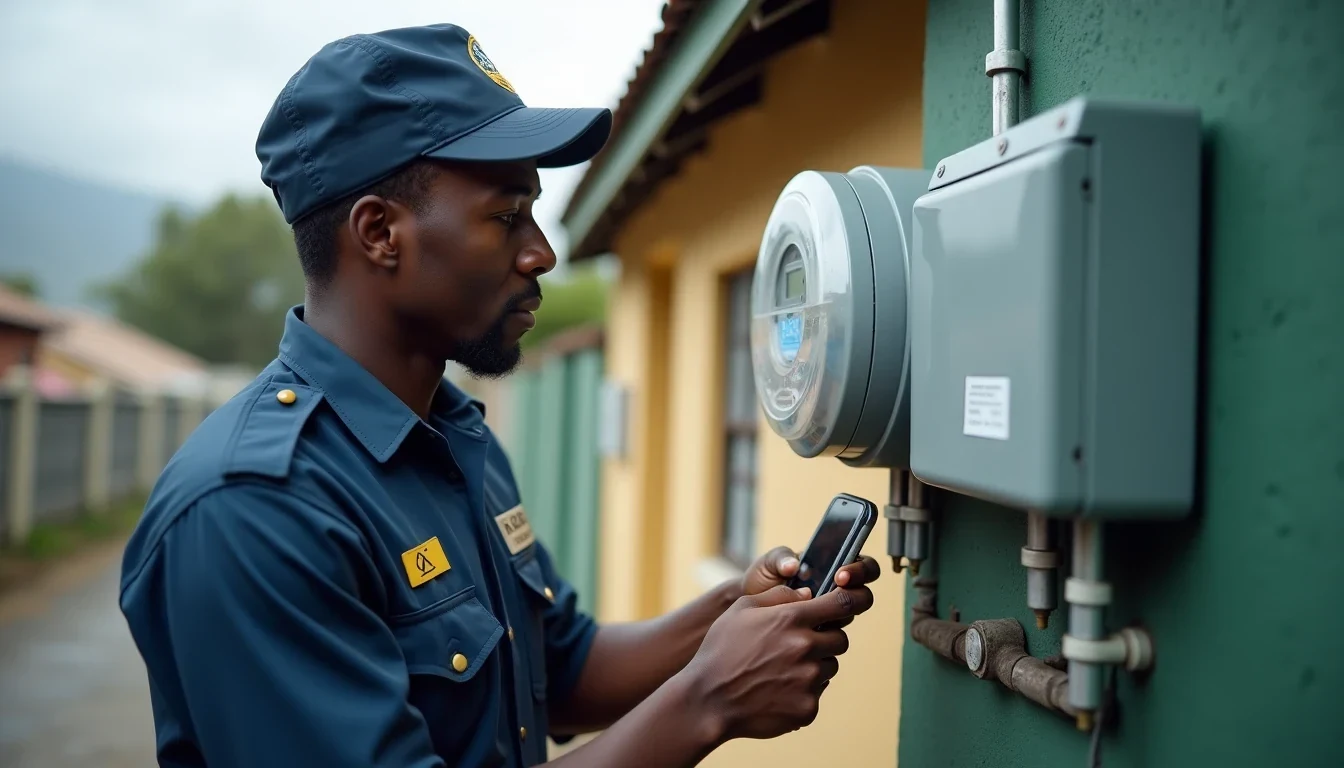
Your ISP sends the email, but the price hike started somewhere else entirely. Frogfoot moved first in February, then Vumatel and Openserve followed in April, and Octotel adjusted packages in May. Now customers of Afrihost, Webafrica, Atomic, and dozens of smaller providers are opening bills that cost more for the same speed on the same line. The frustration is aimed at the company they pay every month. The decision was made by a network operator most households have never directly contracted.
South African fibre runs on a split commercial model that keeps infrastructure ownership separate from the service you actually buy. Fibre Network Operators (FNOs) lay the cables, maintain the street-level distribution points, and install the optical terminal inside your home. ISPs rent wholesale access per active line, typically priced by speed tier, then layer on billing, traffic management, and customer support. When an FNO raises its wholesale rate, every ISP on that network faces the same pressure. What they do next determines whose pocket gets hit.
How the wholesale increase reaches your account
FNOs notify ISPs of pricing changes weeks or months ahead of implementation. The increase might apply to specific speed tiers or restructure the entire wholesale product range. The ISP’s gross margin on every affected line shrinks immediately.
The strategic options are limited and unappealing. Absorbing the cost protects existing customers but erodes profitability, especially on high-volume, thin-margin packages. Passing it through risks churn. Some ISPs split the difference, raising prices while adding a VoIP line or streaming bundle to soften the blow. Others redesign their entire tier structure, dropping a 100/50 Mbps option and pushing customers toward 200/100 Mbps at a higher price point that restores margin.
Timing follows a predictable rhythm. A wholesale change effective in April produces ISP notification emails in March, with 30-day notice periods matching standard contract terms. The customer sees a branded message from a familiar provider. The underlying driver is invisible unless you know to look.
What switching ISPs actually saves you
The research task here is comparing the same ISP across different FNOs, and different ISPs on the same FNO. The results expose how much room exists for genuine savings.
Take illustrative pricing for a 100/50 Mbps uncapped package. Afrihost charges R697 on Vumatel, R687 on Openserve, R677 on Frogfoot, and R697 on Octotel. Webafrica prices the same tier at R689, R679, R669, and R689 respectively. Atomic comes in lower still: R675, R665, R655, and R675. These are not live quotes, but they show the pattern. The same brand can cost R20-40 more depending on which network infrastructure sits underneath.
Flip the comparison and the insight sharpens. On Vumatel specifically, Afrihost at R697, Webafrica at R689, and Atomic at R675 are competing for identical physical infrastructure. The R22 spread between highest and lowest represents different margin appetites, promotional positioning, and customer acquisition strategies. It does not represent different networks.
This matters for anyone hoping to dodge an FNO-driven increase. If Vumatel raises wholesale prices in April, every ISP on Vumatel eventually faces that same input cost. A promotional offer from a competing ISP might hide the increase for six or twelve months. Once that period expires, the underlying wholesale structure reasserts itself. Switching ISPs on the same FNO buys time, not escape.
The only definitive avoidance is switching FNOs entirely, which requires that multiple operators have actually passed your address. Moving from Vumatel to Openserve means new trenching, new terminal equipment, and a fresh installation queue. It is possible only where competitive rollout has overlapped, typically wealthier suburbs and newer developments where infrastructure duplication made commercial sense.
Who fixes what when it breaks
The split model creates persistent confusion about responsibility. A customer with no connection assumes one throat to choke. In practice, two separate organisations handle distinct failure modes.
Physical infrastructure belongs to the FNO. Street cable damage from municipal digging, distribution point failures, vandalism, or signal loss on the line to your home, all route through the network operator’s repair crews. The optical network terminal installed inside your premises, which converts light to electrical signal, also remains FNO property.
Everything from that point forward sits with the ISP. Authentication failures, IP allocation problems, routing inefficiencies, and Wi-Fi performance from the provided router are all service-layer issues. Bandwidth management, traffic shaping, and account administration likewise fall in the ISP column.
The practical path is always the same regardless of symptoms. Contact your ISP first. They run diagnostics, determine whether the fault is physical or logical, and if necessary log a ticket directly with the FNO. The ISP tracks progress and communicates back. The customer never deals with the network operator directly, which reinforces the illusion that one company controls everything.
Reading the fine print on promotions and equipment
Long-term cost calculation requires understanding two ISP-controlled variables that FNO pricing does not determine: promotional expiry and router ownership.
Discounted monthly rates typically apply for 6, 12, or 24 months from activation, then revert to a higher standard rate. The post-promotion price should be disclosed at sign-up, though it often receives less attention than the attractive opening figure. Early cancellation during a fixed contract period triggers penalties, commonly the clawback of waived installation fees or the remaining value of supplied equipment.
Installation itself ranges from zero to R2,800 depending on complexity and promotion status. Many ISPs waive this for new sign-ups committing to 12 or 24 months. Otherwise, the fibre drop from street to premises carries a material cost.
Router policies vary more than customers expect. Some ISPs provide equipment as “free-to-use,” requiring return on cancellation. Others transfer ownership after contract completion. A few allow outright purchase or permit customers to supply their own compatible device. The optical terminal is always FNO property and never transferable. Confusing the two pieces of hardware, or missing the ownership terms, produces unexpected charges at account closure.
What to watch through the rest of 2026
The February-through-May sequence of adjustments from Frogfoot, Vumatel, Openserve, and Octotel may not be finished. Additional FNOs could follow, and ISPs who initially absorbed increases may reach margin limits and pass them through later in the year.
For households evaluating options, the actionable research is specific: identify which FNOs actually serve your address, compare ISP pricing on each available network rather than assuming one brand is universally cheapest, and model total cost including installation, router terms, and post-promotion pricing rather than reacting to the headline monthly figure.
The email announcing your higher bill will come from an ISP you chose. The decision that made it necessary came from a network operator whose name appears only in the small print. Understanding that separation is the first step toward any meaningful response.