117.3 million mobile subscriptions appear in ICASA’s 2025 report. This number would mean nearly every South African holds two active lines and still leaves connections to spare. The figure towers above a population of roughly 60 million, yet it keeps circulating through policy briefings and press coverage as evidence of deepening digital inclusion. This reading is wrong. The number measures SIM cards, not people, and the gap between those two things shows South Africa’s real connectivity story.
Where the 117 Million Comes From
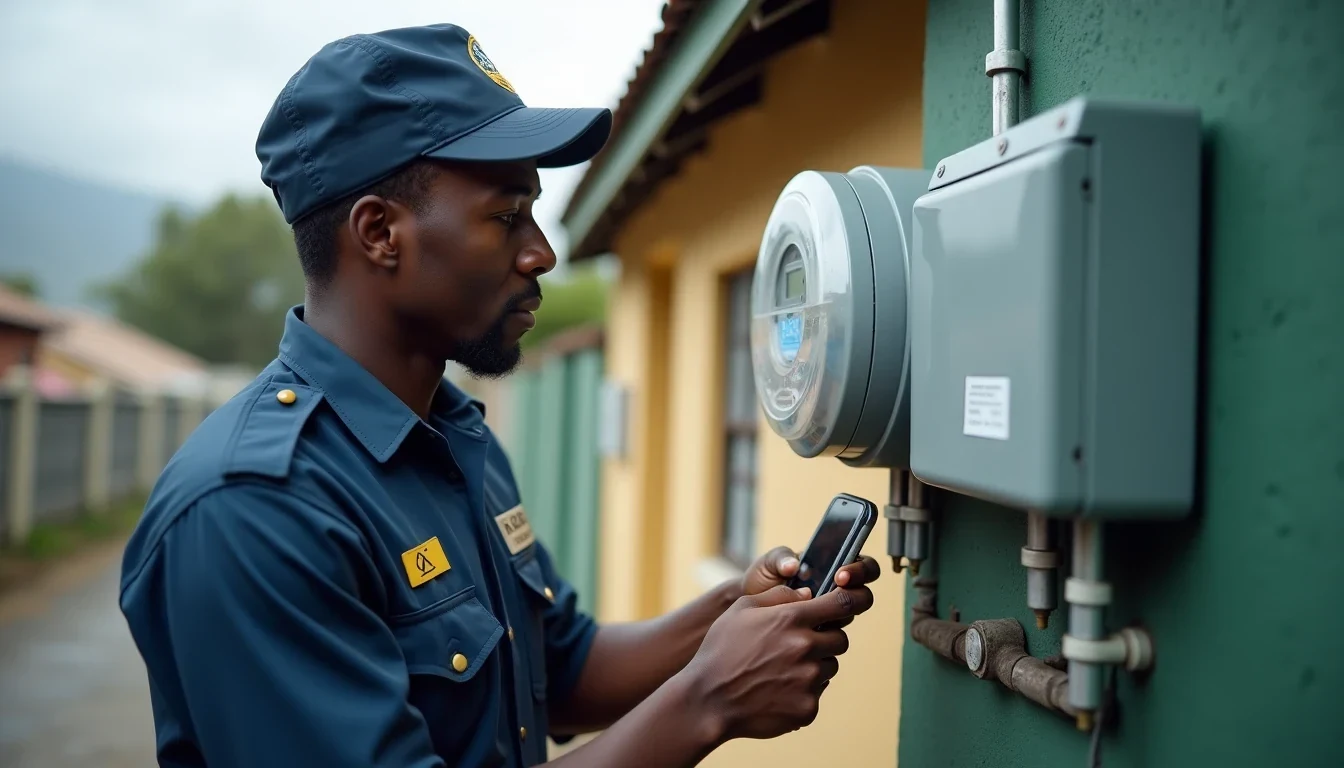
ICASA’s headline count captures every registered and provisioned SIM across all networks. This includes the SIM in your phone, the second one your employer gave you, the data-only card in your home router, the tracker unit in your car, and the smart meter reporting your electricity usage back to the municipality. Each counts as one subscription. Each adds to the total. None of this is hidden, but the aggregation rarely gets unpacked when politicians or operators cite “growth” in mobile penetration.
The more selective metric, 90-day active subscriptions, landed at 91.4 million for 2025. That is down 2.8% from the previous year. This measure filters out dormant SIMs that have not sent a message, made a call, or used data within three months. It is a stricter standard, yet it still bundles together multiple personal lines, business accounts, and machine-to-machine traffic. Even this reduced figure implies a penetration rate approaching 150% of the population, which only makes sense once you account for how many South Africans juggle several active connections.
What the Categories Actually Track
ICASA breaks the market into overlapping buckets that do not map neatly onto human users. Smartphone subscriptions reached roughly 83 million. Mobile-phone data subscriptions stood at about 45 million. These figures are not mutually exclusive. A single user with a smartphone and a separate router SIM could appear in both counts. A household sharing one data device among several people would register once while serving multiple users.
Machine-to-machine connections represent the clearest departure from individual access. These SIMs power vehicle tracking systems, point-of-sale terminals, security alarms, utility meters, and industrial sensors. They generate network traffic and revenue for operators. They do not represent someone in a township or rural village coming online for the first time, yet they inflate the same headline number waved around as proof of connectivity progress.
| Metric | ICASA 2025 Figure | What It Actually Counts |
|---|---|---|
| Total mobile-cellular subscriptions | 117.3 million | All provisioned SIMs regardless of recent use |
| 90-day active subscriptions | 91.4 million | SIMs with voice, SMS, or data activity within 90 days |
| Smartphone subscriptions | ~83 million | SIMs in smartphone devices |
| Mobile-phone data subscriptions | ~45 million | SIMs provisioned for data services |
| Machine-to-machine connections | Included in totals above | Automated device-to-device communication |
The table exposes the definitional divergence. ICASA’s sector-wide aggregation treats every active SIM as an equivalent unit. Individual operators, when reporting to shareholders, often attempt to count “unique customers” or “revenue-generating subscribers” on their own networks. Vodacom, MTN, Cell C, and Telkom Mobile cannot see across to competitors, so even their best de-duplication only captures part of the picture. An operator’s “unique customer” might still hold two SIMs with that network, or another two with rivals.
The Prepaid Inflation Problem
ICASA has flagged that operator definitions may inflate active prepaid connections. A SIM topped up once and left in a drawer can remain technically “active” under certain reporting thresholds. A promotional SIM handed out at a taxi rank and never properly registered might still sit in a database. The 90-day window catches some of this drift, but not all of it. Someone who uses a SIM once for a specific data bundle and discards it contributes to the active count for that quarter without becoming a sustained user.
This matters for policy because prepaid dominates the South African market. The majority of mobile users are not on contract. They buy airtime and data as needed, switch between networks for better deals, and maintain backup SIMs for coverage dead zones. That behavior is rational for consumers. It is also structurally invisible in a raw subscription count.
Why Growth Claims Outrun Real Access
Subscriber growth can look substantial on paper without shifting the lived experience of connectivity. An operator adding two million new SIMs might be capturing existing users who want a secondary line, businesses expanding their fleet tracking, or machine-to-machine deployments scaling up. Those are legitimate commercial developments. They are not the same as two million previously unconnected South Africans gaining reliable, affordable access to voice and data services.
The distinction carries weight for how regulators, donors, and policymakers allocate resources. If 117.3 million subscriptions suggests near-universal coverage, the urgency of addressing remaining gaps fades. Why build more rural towers when the numbers say everyone is already connected? Why subsidize devices or data when penetration looks saturated? The metric itself becomes an argument against further intervention, even while millions of actual people remain poorly served or entirely offline.
What to Watch Instead
A more useful picture would require data that ICASA does not currently publish in its annual reports. Unique user estimates, drawn from operator de-duplication or survey-based research, would help. So would disaggregated rural and urban access figures, or consistent reporting of actual data consumption rather than just subscription counts. The Competition Commission’s ongoing scrutiny of data pricing has surfaced some of this material in dockets and hearings, but it remains fragmented.
For now, the 91.4 million active subscriptions figure is the best available filter, and even that demands careful reading. A year-on-year decline of 2.8% in active connections, against a backdrop of population growth, suggests market consolidation or SIM rationalization rather than expansion. South Africans may be shedding redundant lines as data costs pinch, or as bundled services reduce the need for multiple subscriptions. That trend, if it holds, would shrink the headline number further without necessarily meaning anyone lost access.
The honest frame is narrower than 117.3 million and more complicated than a single percentage. Real connectivity means a person with a device they can afford to use, on a network that reaches where they live, with data priced for regular rather than emergency use. Counting SIMs will not get you there.