Google Earth did not start as a cheerful Google side project. It began as software that could convince a hard-nosed intelligence buyer to open its wallet, then pushed that same technology into a war zone before Silicon Valley gave it a consumer name.
This order matters. Keyhole’s rise was built on a customer with an urgent problem, a willingness to fund the answer, and no patience for software that only looked clever in a demo. It was not built on a perfect market pitch.
A startup built before the market was ready
Keyhole, later known to most users as Google Earth, was built around EarthViewer 3D, a system for loading satellite imagery, aerial photos and terrain data into a moving 3D globe on an ordinary computer. The core idea sounds normal now because it has been normal for so long. In the early 2000s it was anything but.
The company came out of work by former Silicon Graphics engineers who had been thinking about “Digital Earth” style mapping long before the average internet connection could comfortably handle it. The software did something useful but awkward to sell. It streamed only the part of the globe a user needed at that moment, instead of forcing them to download huge files first. Technically, that was elegant. Commercially, it was a headache.
The product sat in an awkward gap. It was too specialised for most businesses, too expensive to build out cheaply, and too demanding for consumer internet speeds of the time. Good software does not always find a buyer quickly. Sometimes it needs someone desperate enough to pay for the privilege of being first.
Why the CIA stepped in
In-Q-Tel played that role. The CIA created the venture fund in 1999 after deciding it could not keep up with the pace of commercial technology using its own internal machinery. Silicon Valley was moving faster than the procurement system built to serve it. In-Q-Tel was the answer: a way to find promising tools in the private market, back them early, and turn them into usable intelligence capabilities.
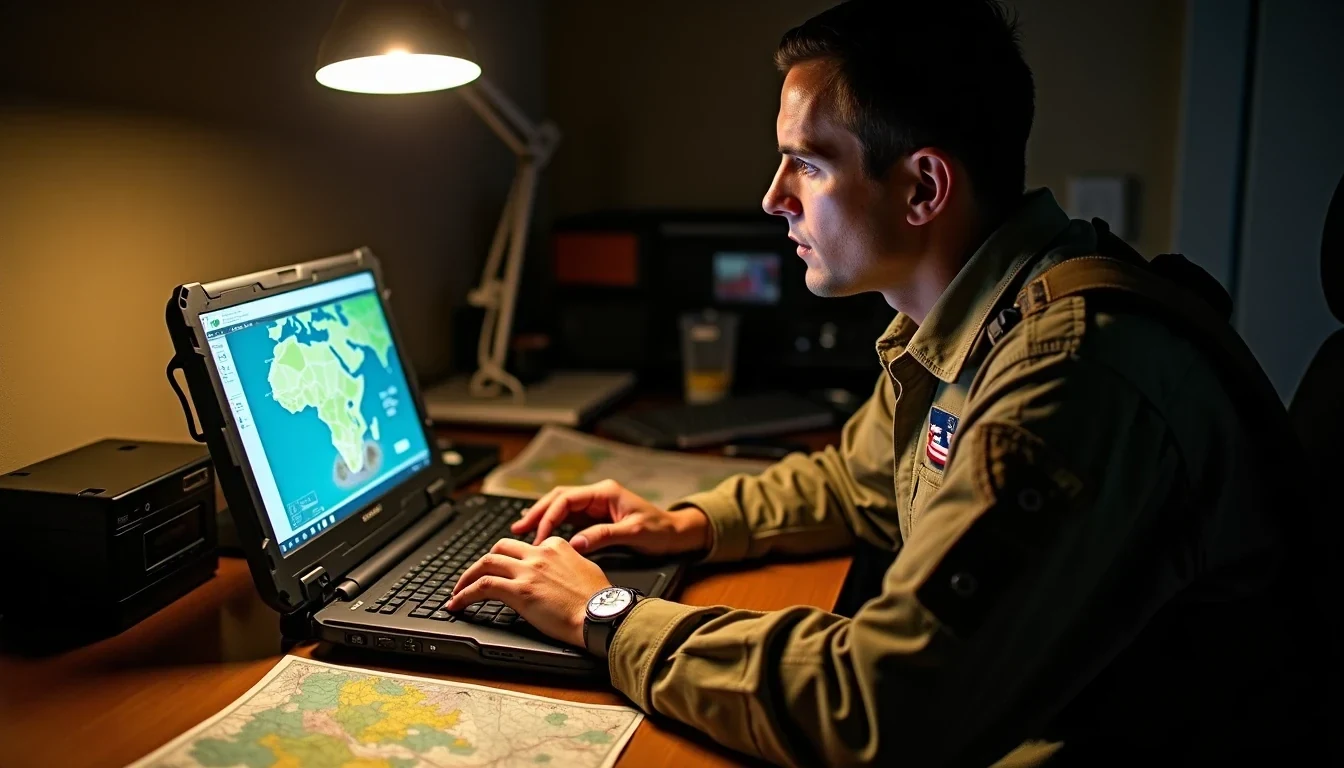
By 2003, In-Q-Tel found Keyhole. The startup had serious geospatial software and not many customers. That combination is usually a warning sign, but in this case, it was exactly what the CIA wanted. The agency invested and then used the technology in the Iraq invasion, where analysts and troops could pull up 3D terrain on laptops instead of squinting at flat maps.
That was the real proving ground. Once a system can help with route planning, target review, and battlefield orientation under pressure, it stops being a speculative product and becomes a tool. Keyhole received funding from the CIA, and it also got a brutal, real-world test from a customer that could not afford to waste time.
What troops got from it
The appeal was practical, not glamorous. A commander looking at a street, ridgeline, or building in three dimensions can understand the terrain faster than someone trying to infer the same thing from a paper map or a static screen. Keyhole’s software made it easier to preview routes, assess lines of sight, and brief people who needed to understand a place quickly.
That was the shift. Military intelligence stopped being locked inside specialist GIS workflows and became something a wider group of users could handle directly. A laptop on the ground could show a piece of geography in a way that felt immediate, not abstract. For soldiers moving through unfamiliar terrain, that kind of access changes how fast people can make decisions.
It also gave Keyhole a commercial asset it could never have bought on its own: credibility. A startup can claim its technology works. A defence customer using it in a live invasion is a stronger argument.
Why Google bought the company
Google was not buying a pretty demo. It was buying a platform that had already been hardened by a demanding customer. Sergey Brin saw the technology and, by the account that has circulated for years, was struck by what it could do. Google acquired Keyhole in 2004 and turned it into Google Earth.
That move tells you what Google valued. The company was taking in a system that had already solved part of the hardest problem in digital geography: how to make massive data feel usable on a normal machine. Later consumer success rested on the fact that someone else had already forced the product through a far harsher environment.
Google Earth did not win because it was first. It won because it had been battle-tested before most people outside the intelligence world had even heard of it.
The lesson for startups
The useful lesson here is not that every startup should chase the military. It is that a first customer can do more than write an initial cheque. The right one can validate the product, force real improvements, and make everyone else believe the thing is real.
That kind of buyer is usually not polite. It wants the software to work now, under pressure, with no room for fantasy. For founders, that is uncomfortable. For investors, it is exactly the sort of pressure test that removes doubt. A desperate customer funds a company and proves the company has solved something painful enough to matter.
Keyhole’s path from obscure startup to Google Earth is a reminder that the commercial story often starts in the most unforgiving place available. Sometimes the most valuable first user is the one who needs the product badly enough to break it.