
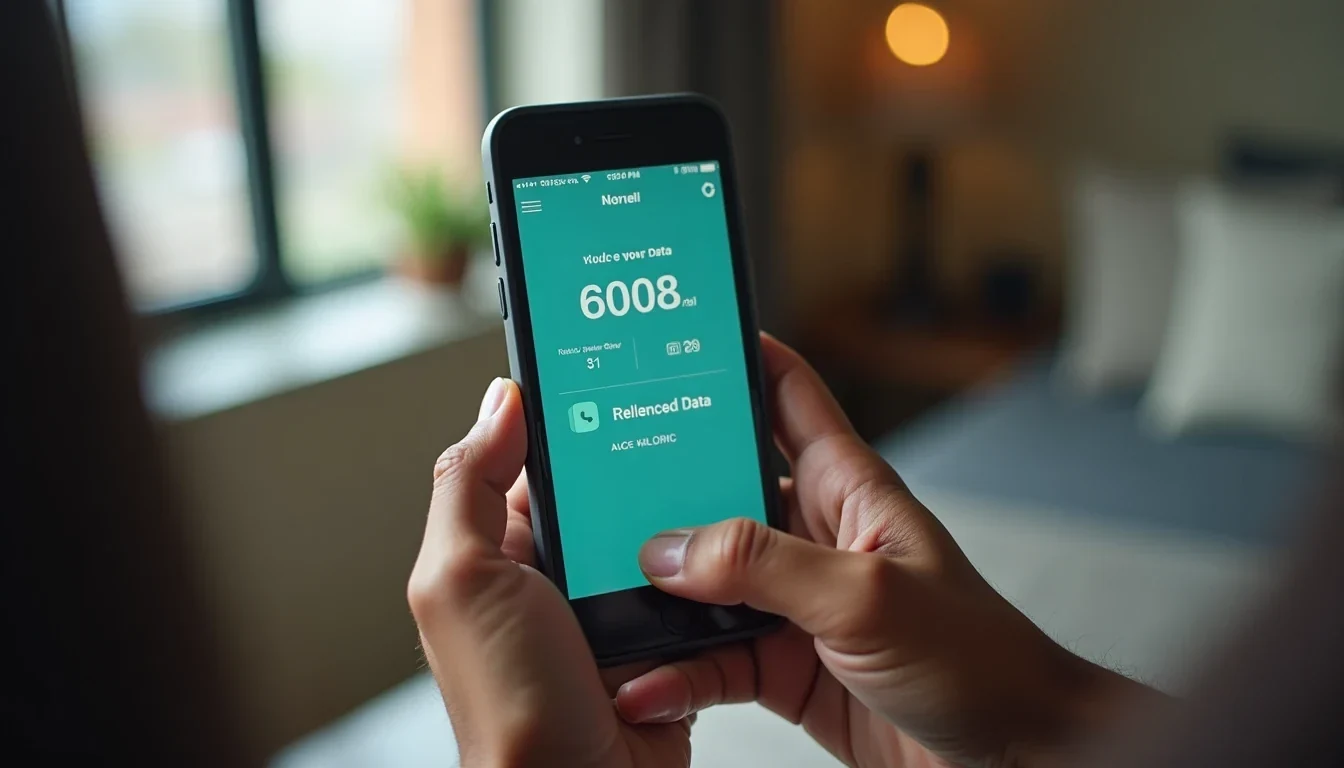
From 23 January 2027, unused mobile data on most ordinary bundles will stop evaporating at midnight. ICASA’s new End-User and Subscriber Service Charter rules force the big operators to carry over leftover data automatically, with no customer request and no extra fee.
This sounds technical until you translate it into household language. A 30-day bundle with data still sitting on it at expiry will no longer vanish just because the calendar turned. If the rules are implemented cleanly, the user keeps the benefit, the network loses the easy expiry trap, and out-of-bundle billing can no longer jump in as the default punishment for running out.
What ICASA changed
ICASA published the regulations on 23 January 2026 and gave operators 12 months to prepare. The headline rule is simple enough: if a data bundle lasts longer than seven days, the unused portion must roll over at least once on its own.
The carry-over has to happen without any action from the customer and without an extension charge. The rolled-over data keeps the same validity period and the same conditions as the original bundle. If the data came from an anytime bundle, it stays anytime data. If the original bundle had usage limits or network restrictions, those conditions travel with it.
A rule buried in the same package will have just as much practical effect. When a subscriber has several active bundles, the network must consume the one closest to expiry first. This stops newer data from being eaten while older data dies untouched.
Which data is protected
ICASA did not give every bundle the same treatment. The protection covers ordinary paid bundles with a validity period longer than seven days. It does not extend to several common categories that operators use for promotions and short bursts of usage.
Excluded from automatic rollover are:
- bundles lasting seven days or less
- uncapped bundles
- free bundles
- promotional bundles
That last category will be the one to watch in the balance screens. Networks will need to label promotional data clearly enough that a customer can see it will still expire on schedule. A bonus 500MB handed out in a campaign can remain a bonus 500MB. It just cannot be dressed up as protected stockpiled data.
The result is a two-tier data world. Standard paid bundles get the safety net. Short-term packs, freebies, and campaign data can still disappear when their time runs out.
What a 30-day bundle will do
Take a 30-day bundle with 2GB left when the cycle ends. Under the new rules, that 2GB does not vanish. It rolls over from the original expiry point and keeps the same 30-day life attached to it.
So if the bundle expires on 23 February, the leftover 2GB should remain available until 25 March, assuming the operator applies the rule exactly as written and keeps the original validity window intact. The customer does not need to buy an extension, tap a button, or sit through a warning screen to keep it alive.
Now add a second bundle to test the priority rule. Say the customer also buys a fresh 5GB bundle that expires later. The network must draw down the older bundle first, then switch to the newer one once the first pool is empty. This prevents the common annoyance where a user has old data buried in the account while the network burns through fresh data first.
A practical balance screen should therefore show:
- the original bundle expiry
- the rolled-over expiry date
- the amount still available
- a clear label for any promotional or short-term data
How transfers will work
ICASA also wants eligible data to be transferable to another user on the same network. In plain terms, if the bundle can be protected, the network must also allow a subscriber to pass some of it on, subject to the operator’s own menu structure and limits.
The mechanics will sit inside the normal self-service channels. For Vodacom, that points to the My Vodacom App and the usual USSD tree, likely through `111#`. MTN users should expect the MyMTN App and a USSD route such as `136#`. Telkom and Cell C will need to surface the same function in their own apps and menu systems, while MVNOs will rely on whatever transfer tools their host network exposes.
The important practical detail is the menu label. Users should be able to find something like data transfer, share data, or send bundle from the app or USSD menu, pick an eligible amount, and enter a number on the same network. If the operator buries the function under a vague support path, the rule will exist on paper and fail in the real world.
What networks still have to decide
The largest operational change is not rollover. It is the end of automatic out-of-bundle charging as the fallback setting. Once a bundle runs out, networks must treat extra charging as an opt-in choice rather than the default outcome.
This will force a redesign of account settings, SMS prompts, app toggles, and USSD menus. The customer should have to choose to allow out-of-bundle billing. If they do not choose it, the connection should stop or push them back toward buying another bundle.
Vodacom, MTN, Telkom, Cell C, and the MVNOs attached to them will each have to show how this works on their own systems. The law is the easy part. The harder test is whether the balance screen, the transfer menu, and the expiry logic tell the truth in a way ordinary users can read without guessing.